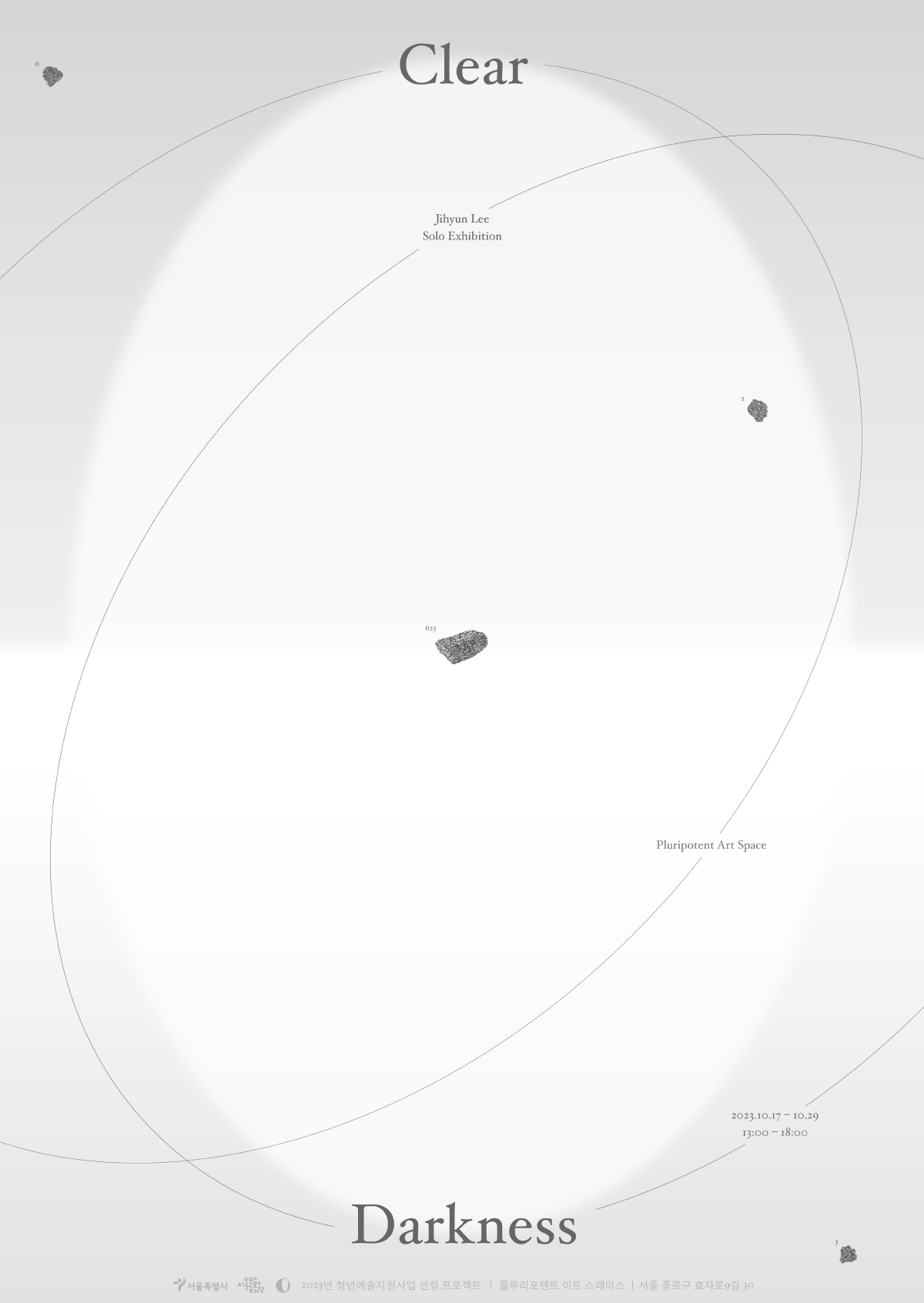
JIHYUN LEE
-
2023. 10. 17. - 10. 29.
⟪CLEAR DARKNESS⟫, 이지현 개인전
지도의 암실
글 | 조정민
난 여전히 네비게이션이 말해주는 최단 시간 루트를 믿지 못한다. 실시간 정보를 반영하여 길을 안내한다고 하지만 언제나 나의 활동 타임라인과 정보 반영 타임라인이 완벽하게 일치하기는 어렵다. 또한 목적지에 해당하는 가게들의 정보가 과거에 있는 경우도 허다하다. 무엇보다 처음 방문해보는 지역이라고 생각해보자. 지도를 쥔 당신에게 여기는 여전히 밝은 암흑이다. 시간과 경험을 통한 다수의 증명이 이뤄졌기에 지도라는 명칭을 얻게 된 도식화 이겠지만 그 또한 당신이 검증한 것은 아니다. 무엇보다 사실 지도는 탄생 자체가 모순이다. 지구라는 구형의 3차원의 세계를, 2차원으로 옮긴다는 것 자체가 불가능이니까. 그럼에도 당신은 지도를 전적으로 믿고 길을 간다. 지도가 당신에게 이해되는 논리의 시작이 믿음, 그리고 이어서 오는 경험이라면 지도는 상식과 정보라는 카테고리 속에 정의될 수 있을까?
-
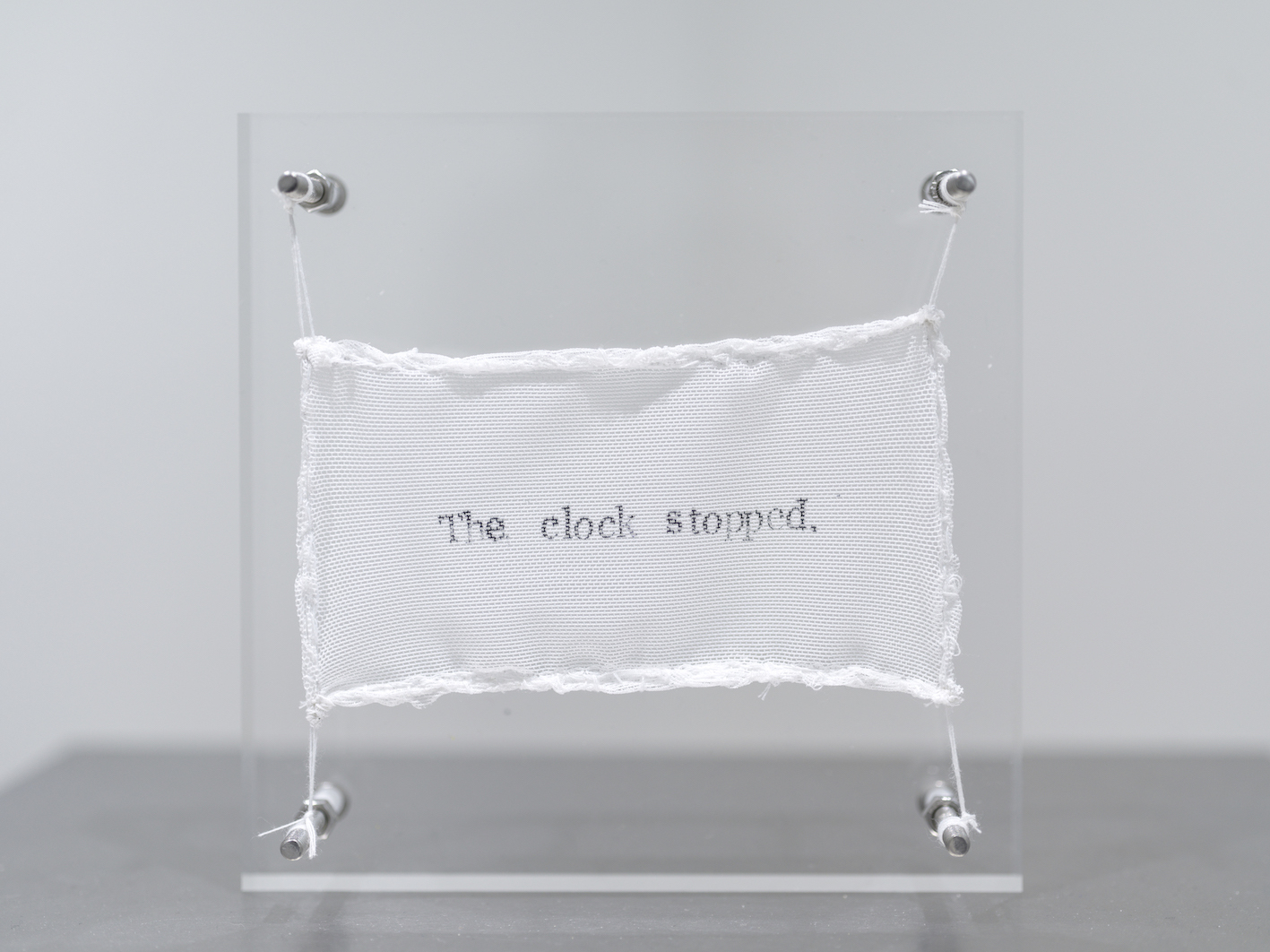
지도를 말하며 밝은 암흑이라는 표현을 쓰고 나니 단순하나 딱 들어맞는 연결고리로 이상의 단편 <지도의 암실> 이 떠오른다. 그가 발표한 첫 소설인 <지도의 암실> 은 가장 읽기 어려운 소설이라 불리곤 하는데 많은 그의 소설이 그렇지만 유독 무슨 말인지 모르겠는 파편화된 문장들의 연속이다.
-
하지만 자의식의 키워드로 대표되는 그의 작품세계를 고려하면 제목에 모든 것이 있다. 잠자리에서 눈을 뜬 시간부터 다시 잠자리에 들 때까지의 묘사들은 실시간의 심리적, 물리적 풍경을 반영한 지도의 언어화로 어둠이 모든 것을 품어 구체화된 표현이 어렵지만 분명히 존재하는 구역, 암실 그 자체이다. 명확한 기록이 불가능한 추상의 영역인 암실을 발견하고 표시하여 목적지로 설정되도록 유도하는 것, 이는 지도의 숨겨진 역할이다. 역사는 언제나 지도의 내용을 벗어날 때 발생하지 않았는가. 그리고 그러한 결단은 이성적 계산값이 아닌 호기심, 욕망, 낭만이라는 감정과 기억의 지휘여 왔다.
-
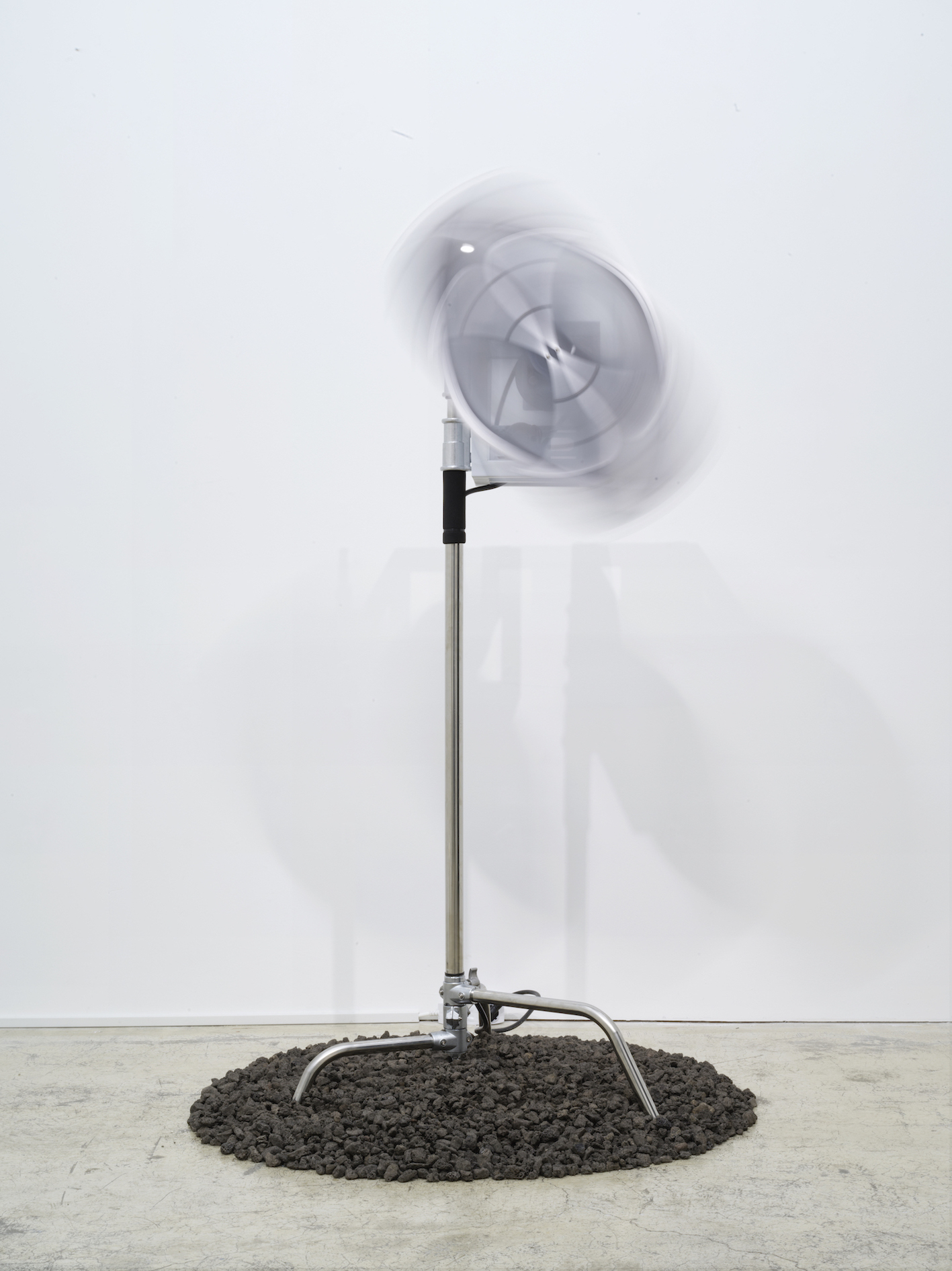
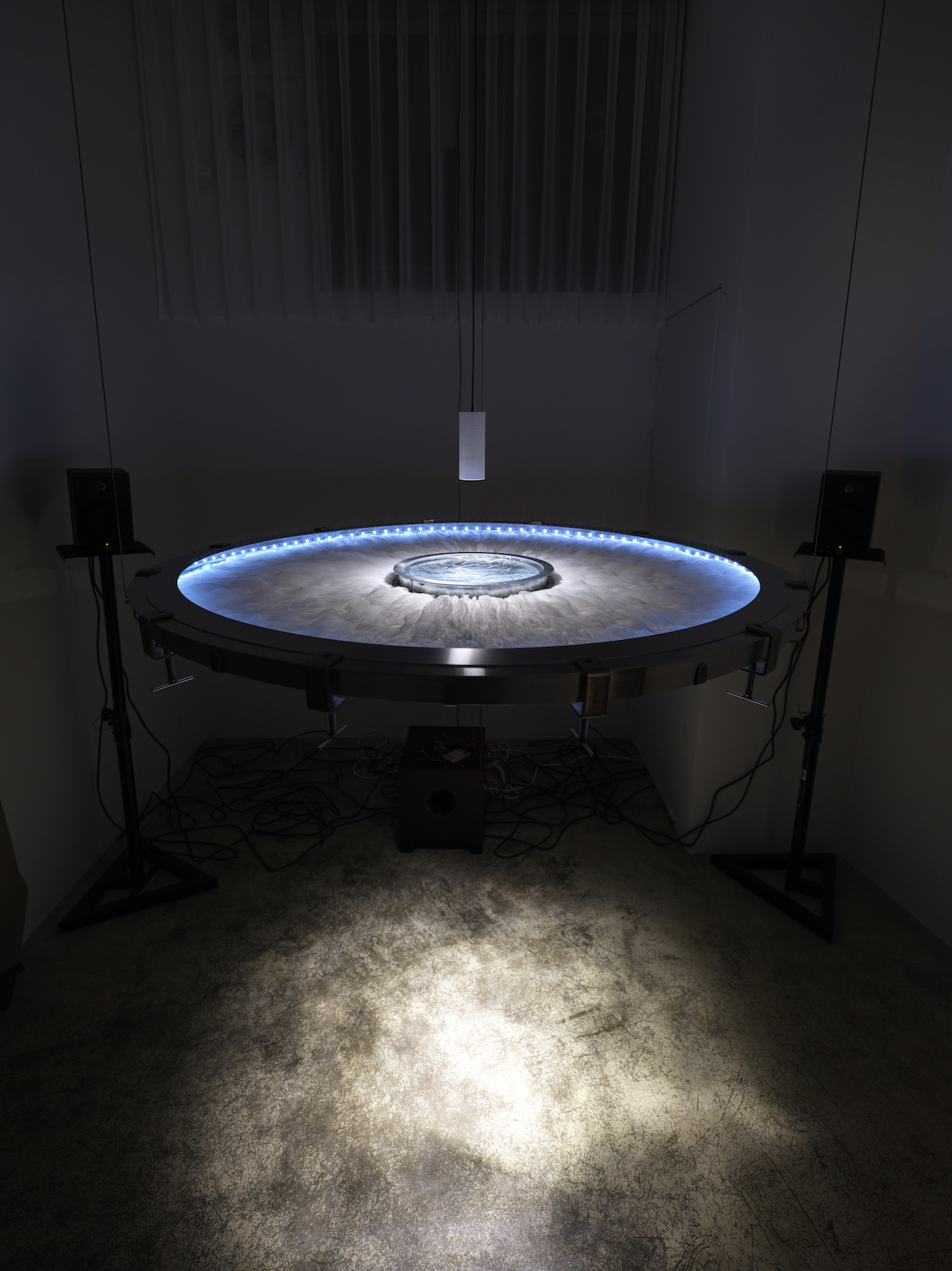
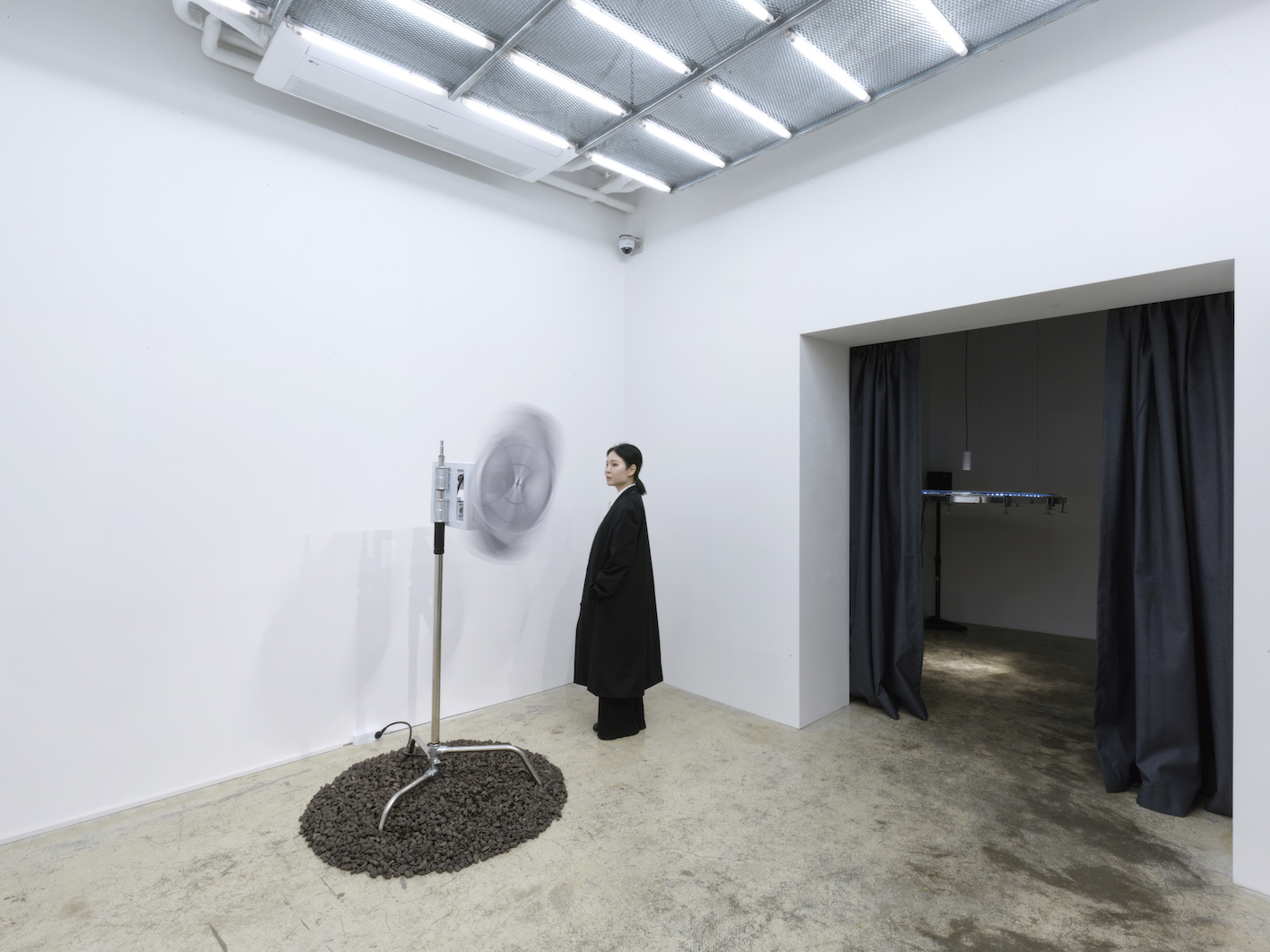
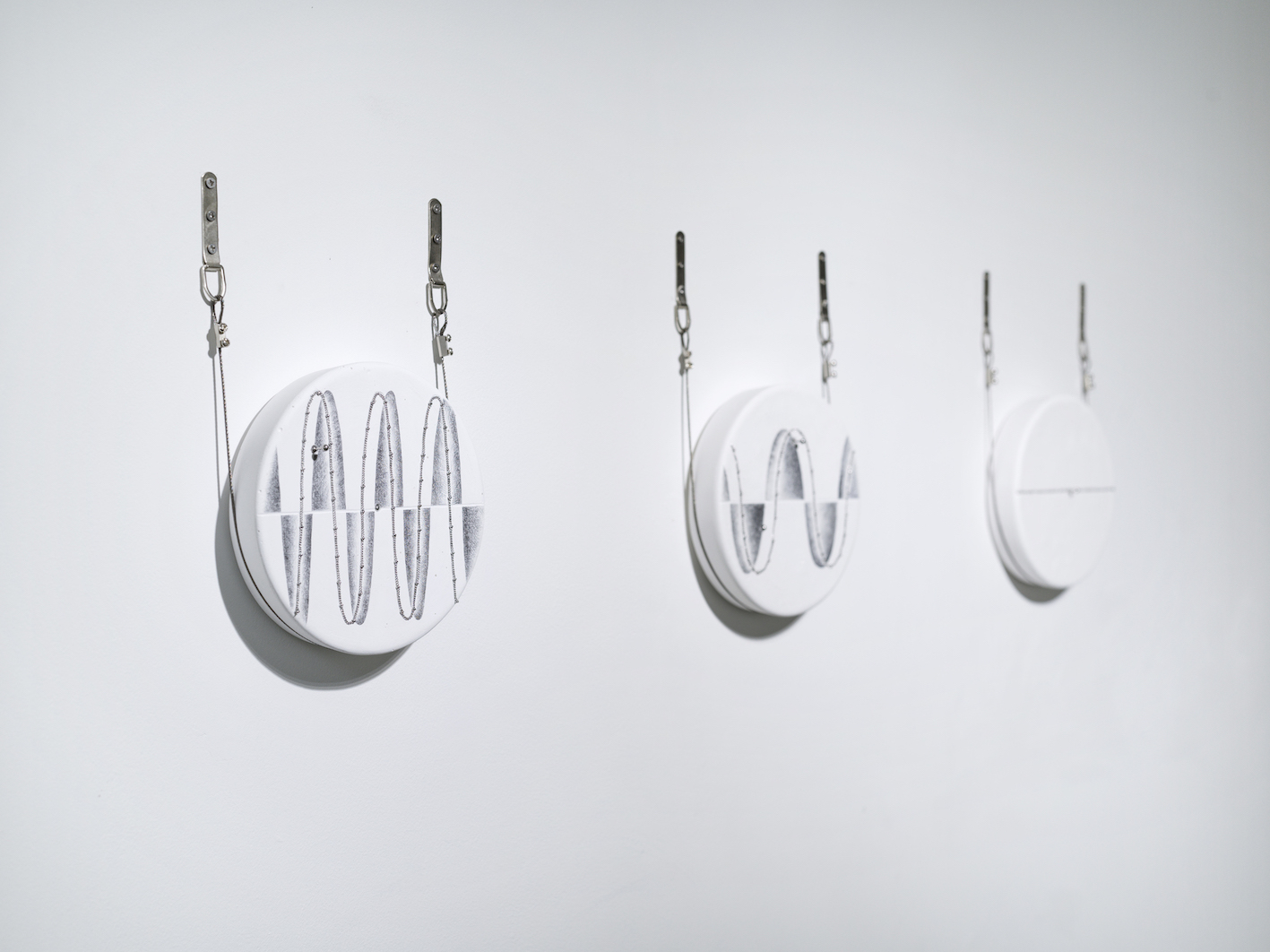
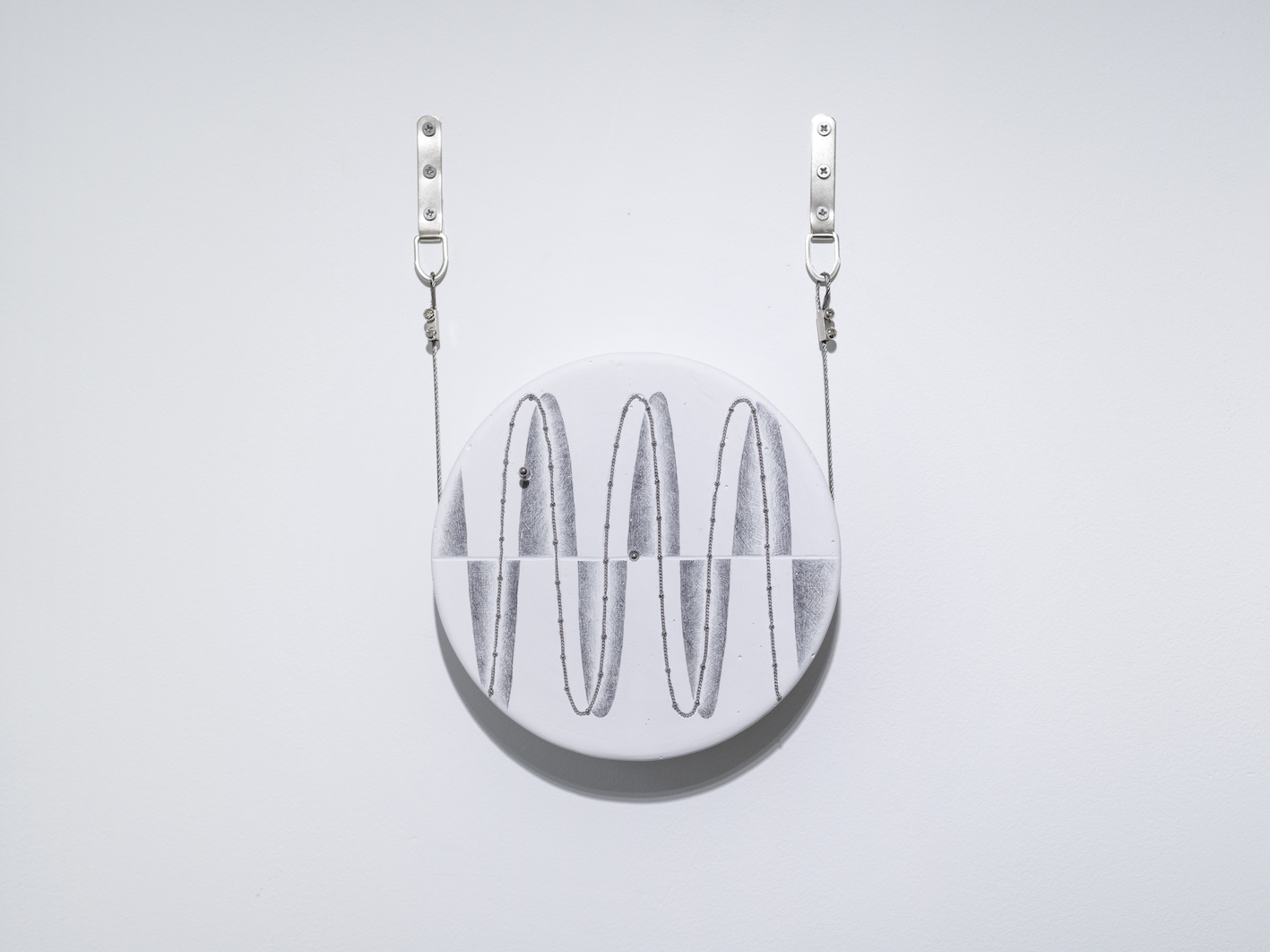
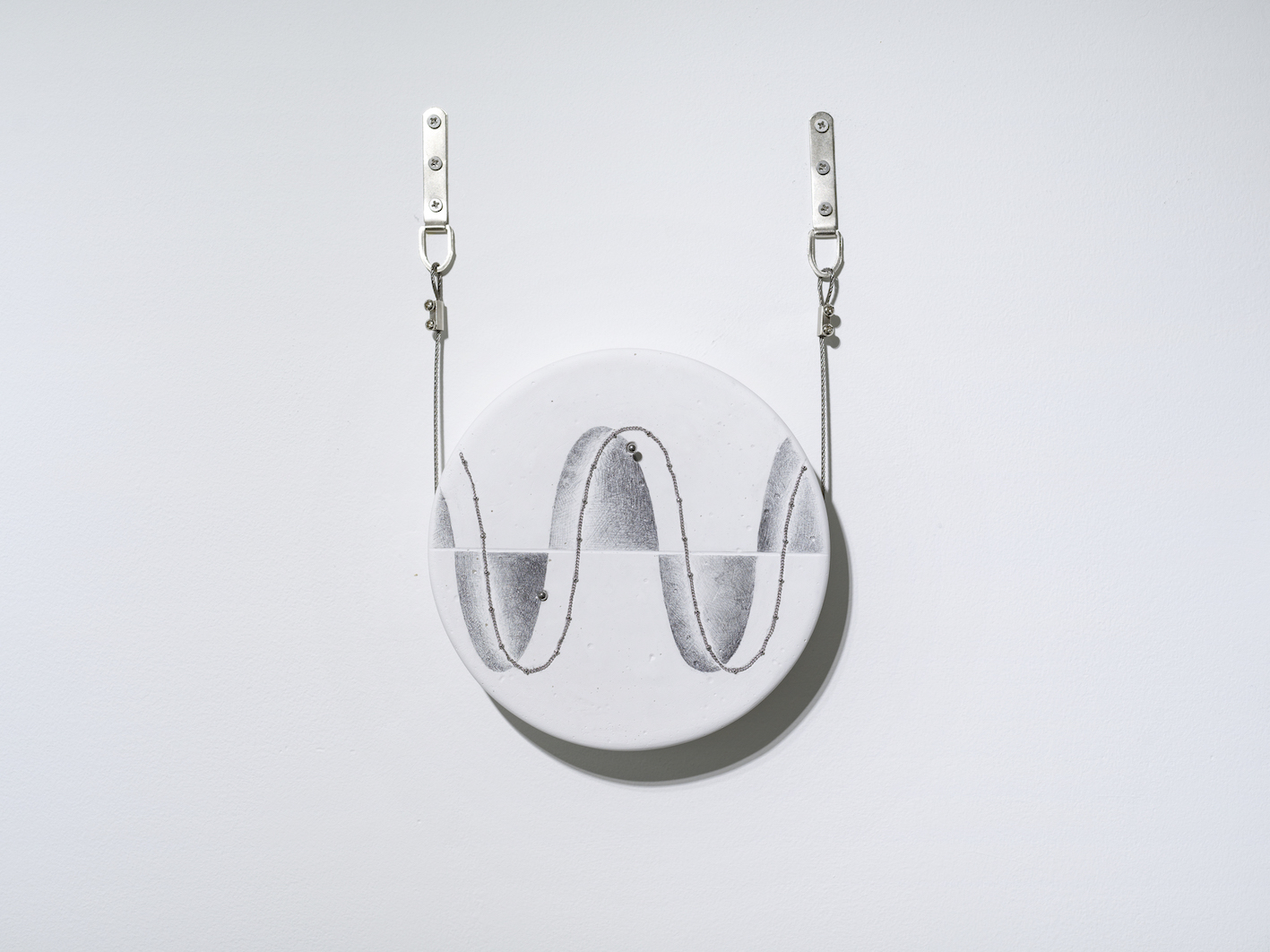
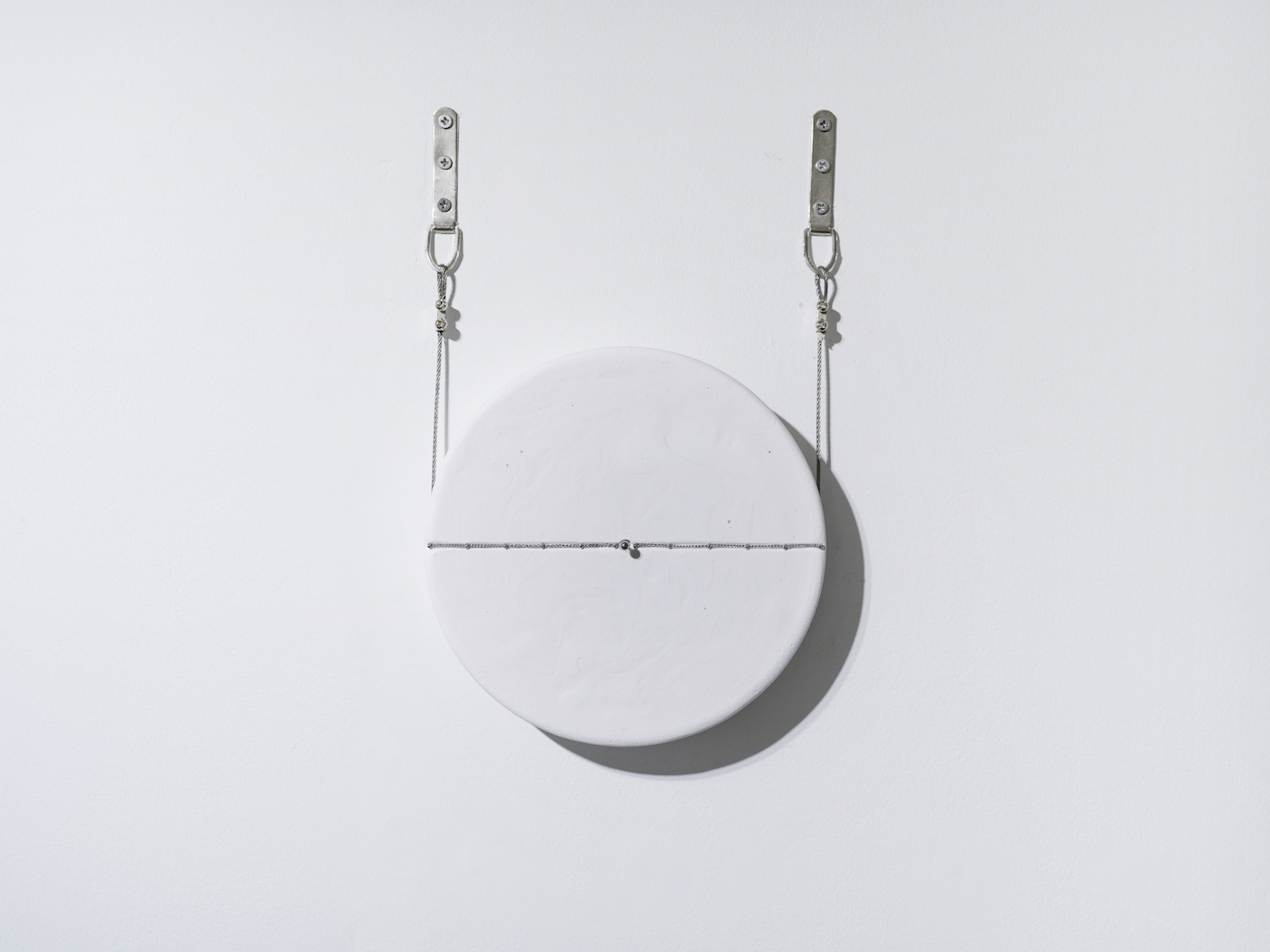
이지현의 이번 전시는 그에게 네비게이션으로 기능하는 지도임과 동시에 지도의 역설을 드러내며 지도의 암실 공간을 구현하여 객관적 정보로 보거나 읽는 것이 아닌, 감각적으로 흡수하고 경험하는 법을 함께 제시한다. 때문에 지도는 불변의 기록이 아닌 순간의 현상으로 치환되며 그의 지도에서는 지도의 역설적 전제의 중심인 의심과 믿음이 표면 위로 드러나게 된다.
-
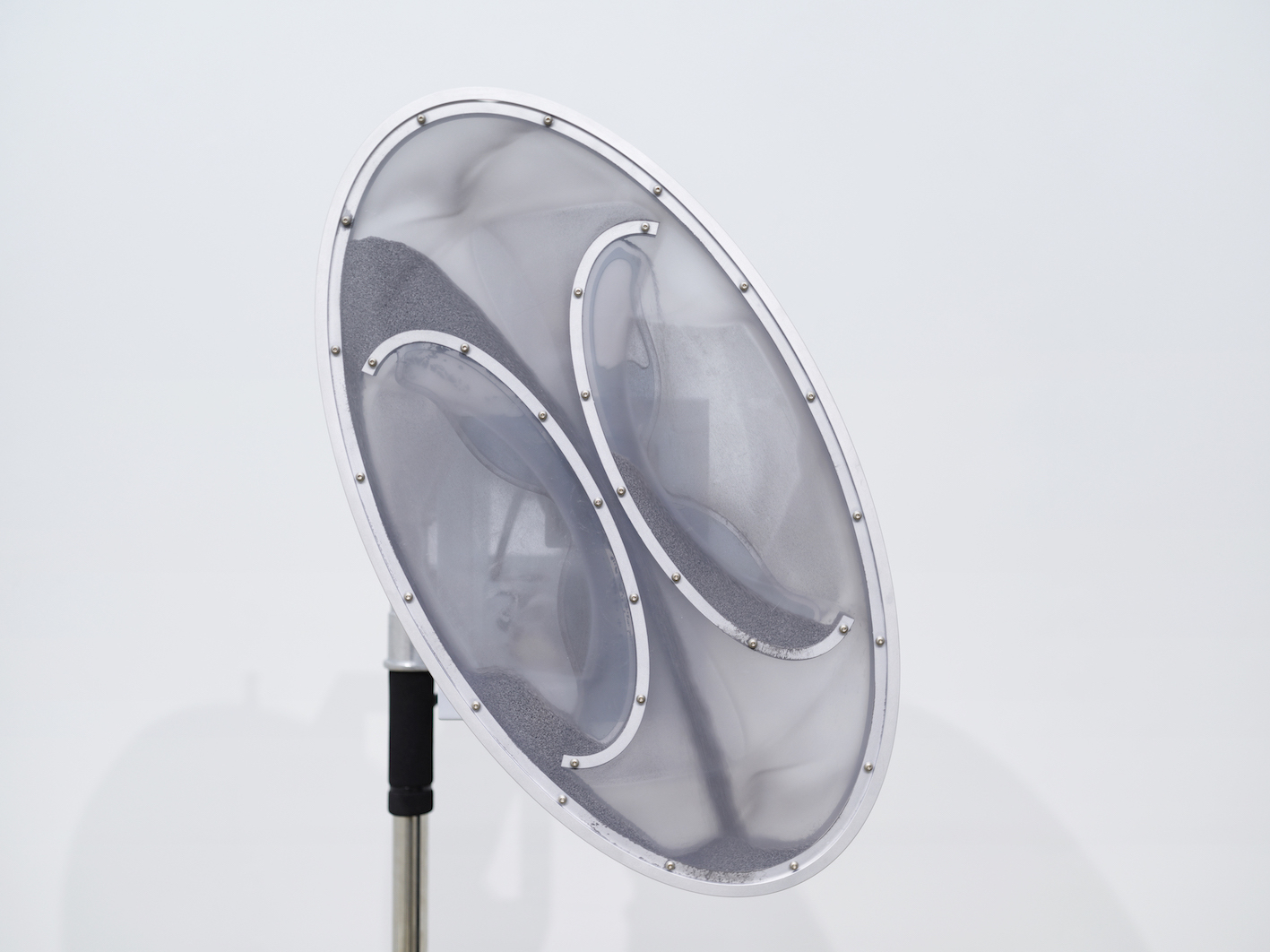
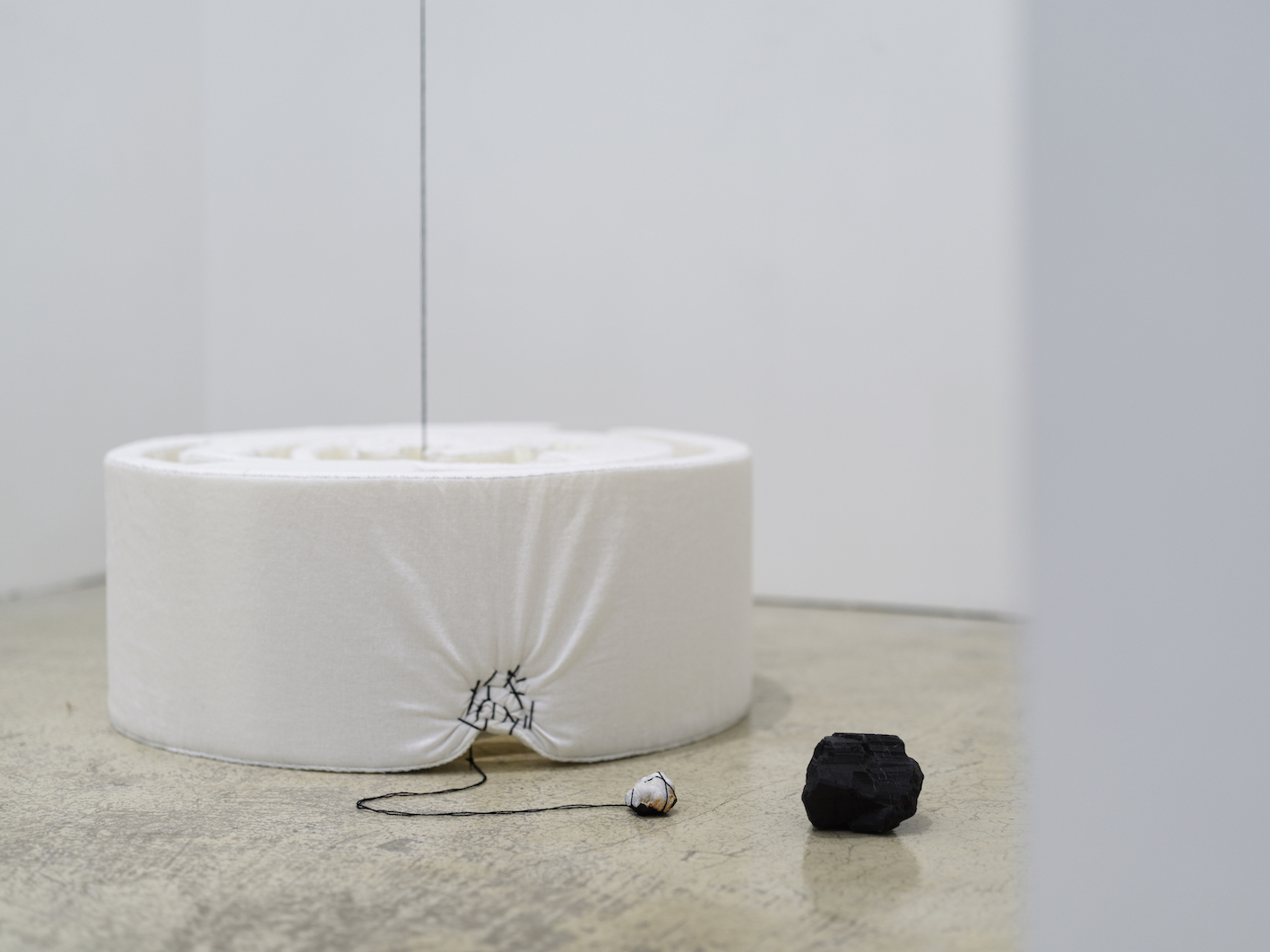
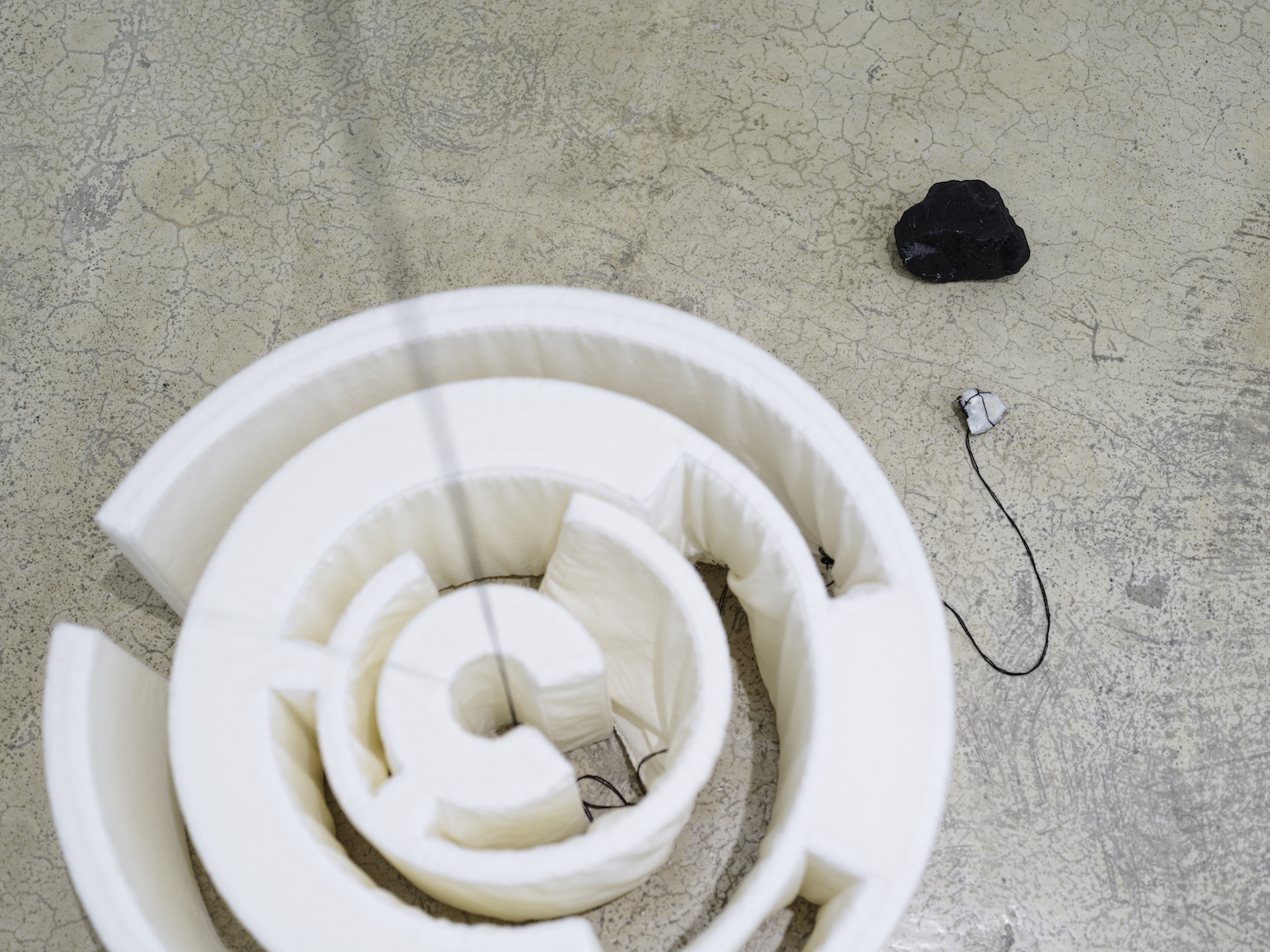
그가 해석한 평면지도의 입체화인 원형미로는 붕괴를 탈출의 갈래로 말하고 기억과 감정, 정보와 이성의 대륙 간을 넘나들며 반복되는 혼란과 깨달음은 하나의 트랜스의 시공간에서 마주한 채 서로를 돌고 돌린다. 끝으로 관객은 물리적으로 공간화된 어둠인 암실에 다다르게 된다. 여기서 마주하는 것은 여전히 독해불가능한 이상의 암실과 같이 남겨두고자 말을 줄이겠다.
어제는 네비게이션을 보며 운전을 하다가도 길을 잘못 들어 한참을 돌아 집에 갔다. 덕분에 깊은 암흑같이 맑은 눈을 가진 어린 사슴을 보았다.
-
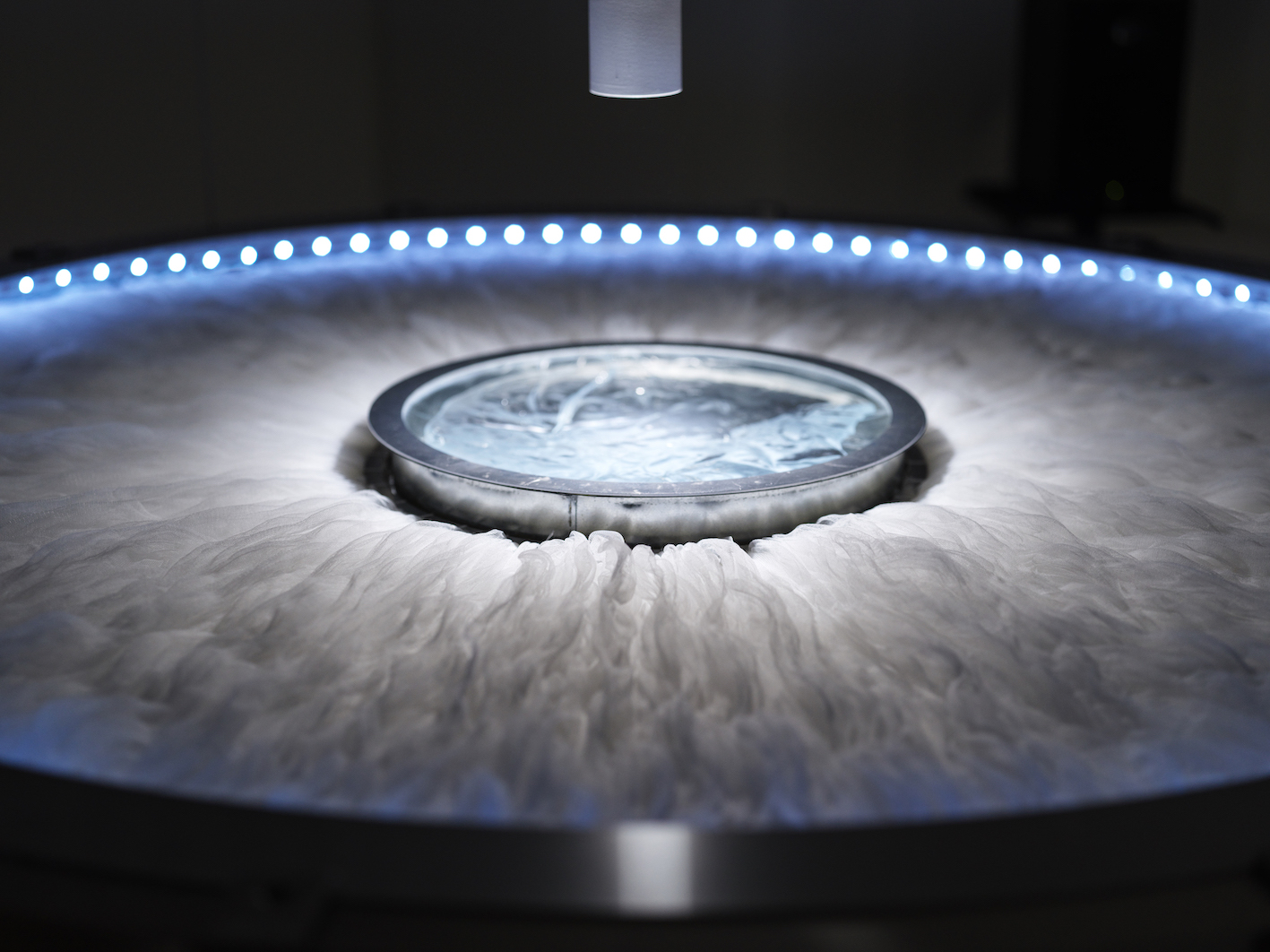
2023. 10. 17. - 10. 29.
CLEAR DARKNESS, JIHYUN LEE
Darkroom of Maps
Preface | Jungmin Cho
I still do not trust the shortest route my navigation recommends. They say the routes are provided based on real-time data, but my activity timeline very rarely mirrors that of data reflection. Often the information on locations that are my destination exist in the past. Think of an area you are visiting for the first time. Even though you are holding a map, the space you are in is bright darkness. The schematic in your hands has been named a map through the proven experience of many across an extended amount of time, but it has not been verified by you. Above all, the existence of a map is a contradiction, as it is impossible to accurately transfer the spherical three-dimensional Earth onto a two-dimensional surface. Yet you find yourself utterly trusting and following the map. If the starting point of understanding a map is trust, and the experiences that follow, can a map be defined within the categories of common sense and data?
-
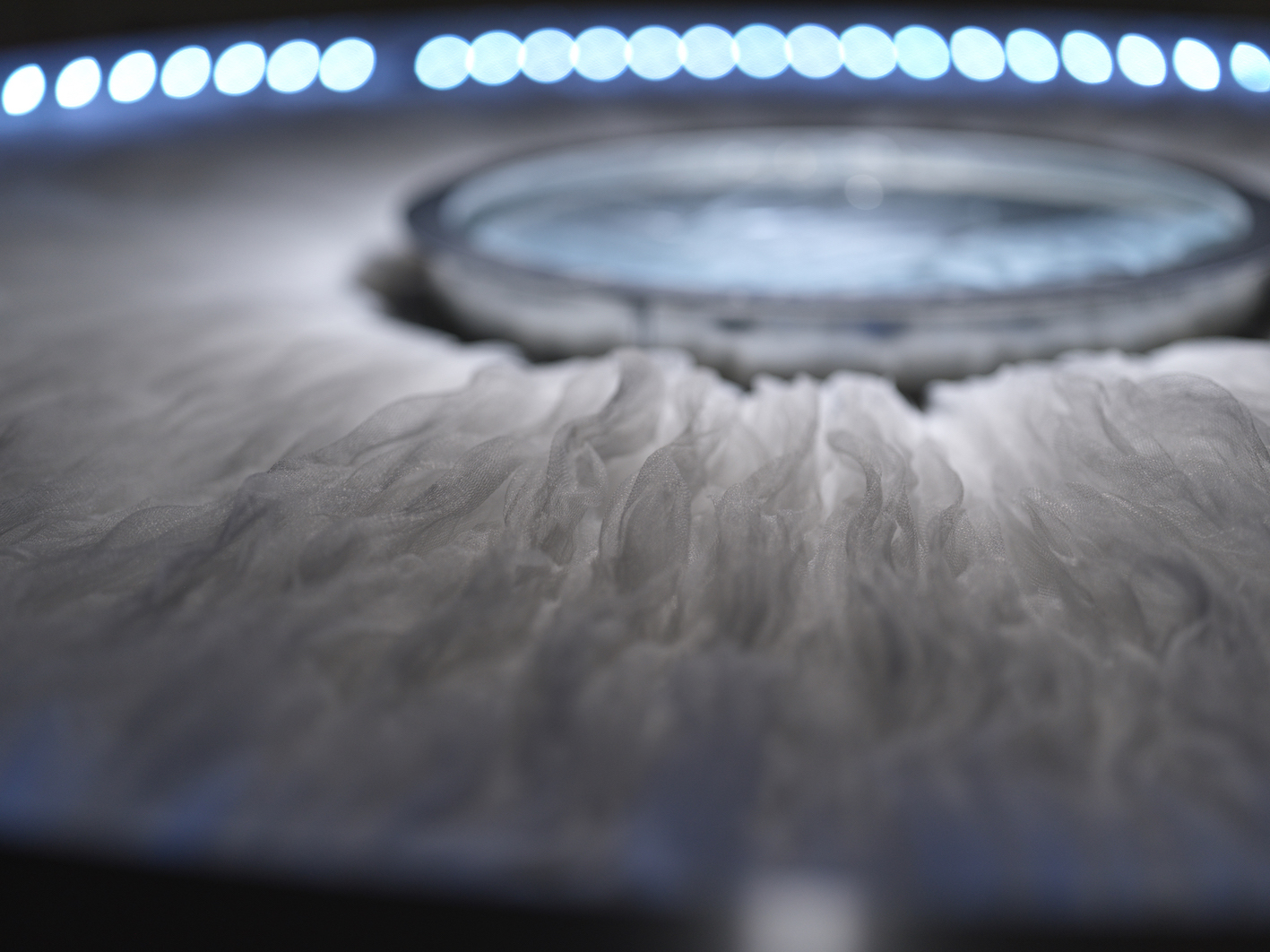
As I use the description “bright darkness,” the short story “The Darkroom of a Map” by Lee Sang comes to mind as a simple but amply fitting link. As the writer’s first novel, “The Darkroom of a Map” is often called the most difficult piece of writing to read. Like many of his other pieces, it strings together a series of fragmented sentences, but the result is especially difficult to decode. However, considering his body of work as a pinnacle of the keyword “self-consciousness,” it is all in the title. His description of the moment you open your eyes in the morning and close them when you go to sleep is the verbalization of a map that depicts the psychological and physical landscape of real-time, and is a darkroom itself – an area that is difficult to concretely map out but surely exists. That is the hidden role of a map: discovering and marking darkrooms that exist in an abstract domain, and cannot be documented exactly, and guiding one to set them as destinations. Does history not always occur when one ventures beyond then contents of a map? Determination to do so has always been led not by rational calculations, but by the emotions and memories of curiosity, desire, and romanticism.
-
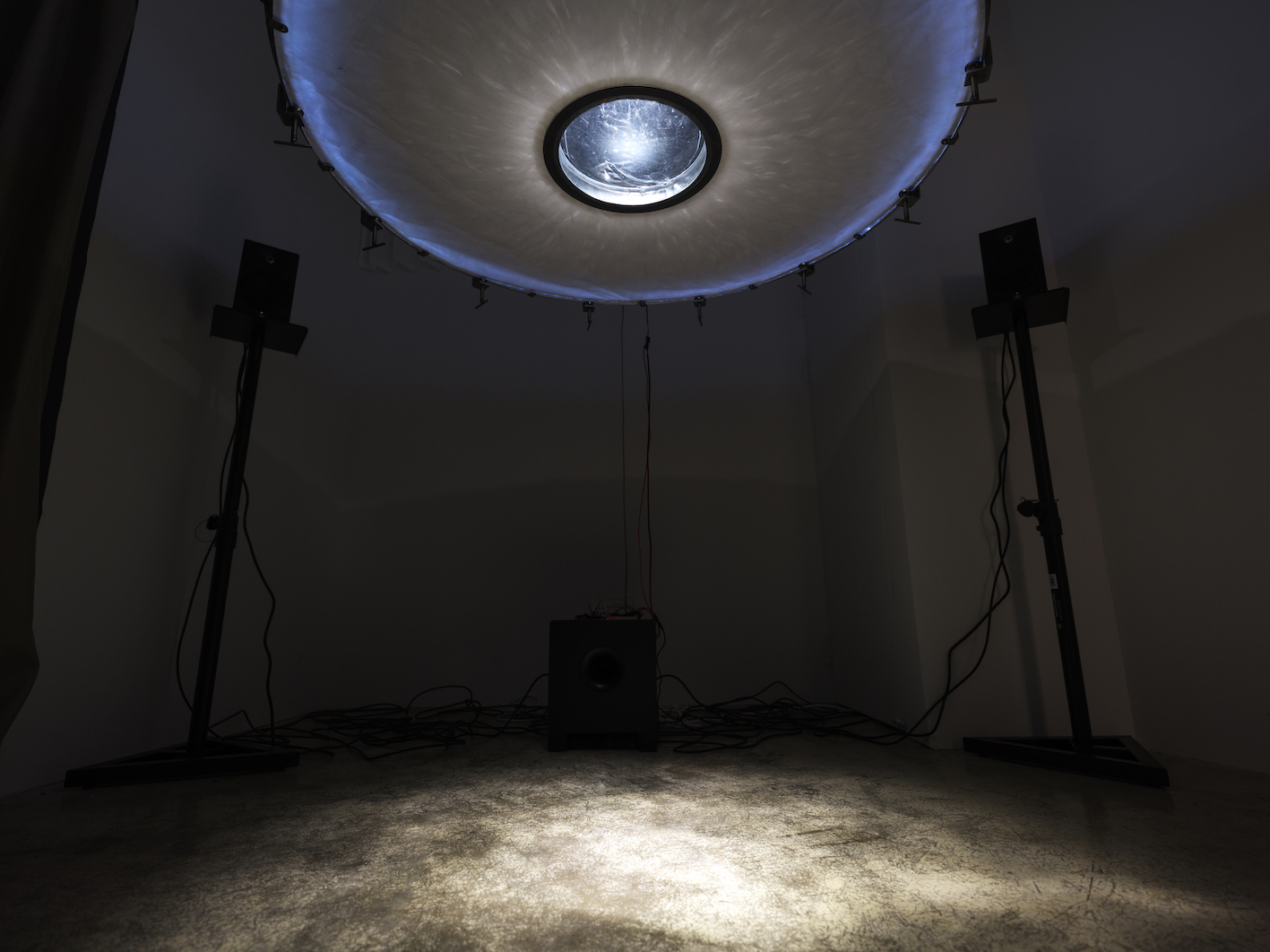
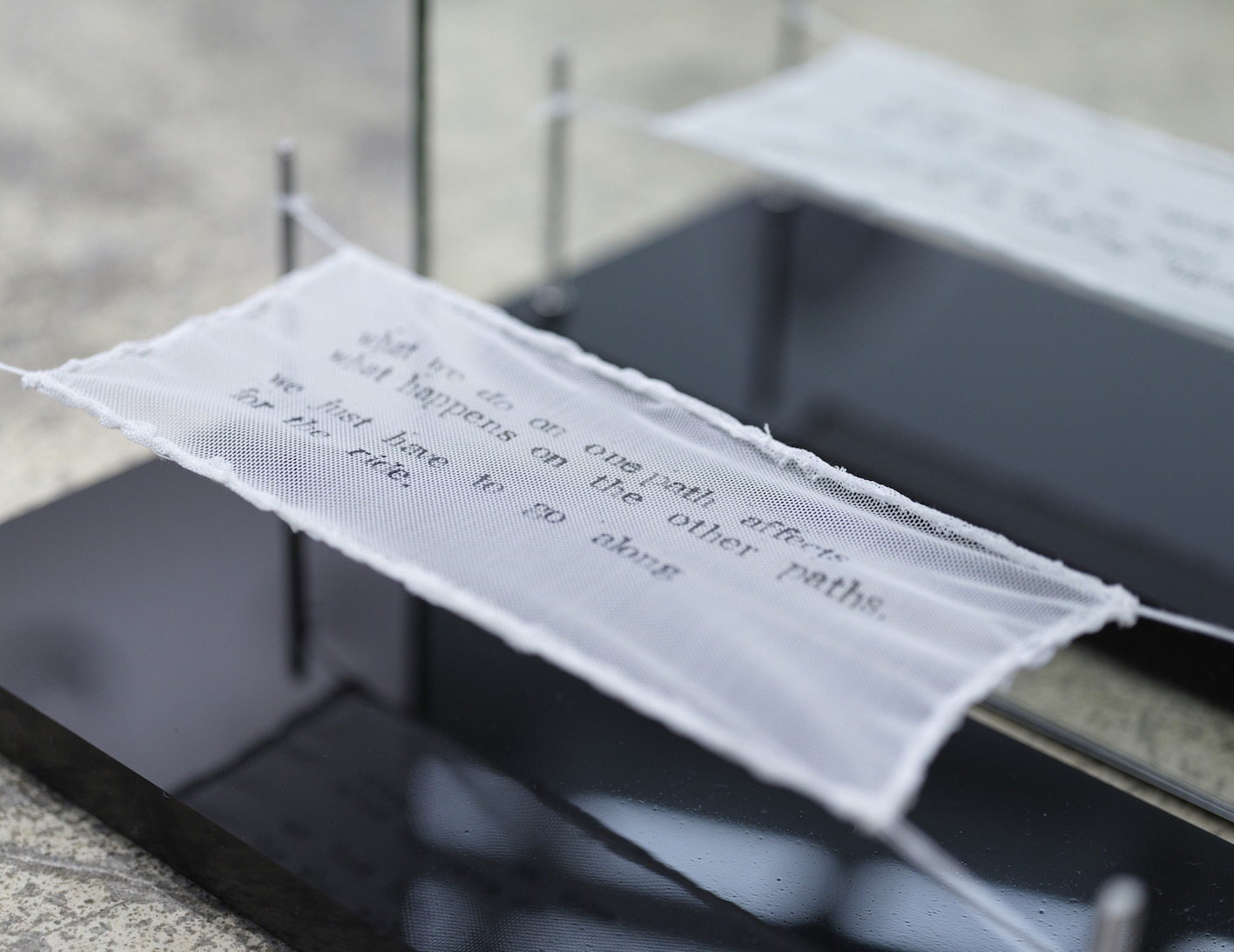
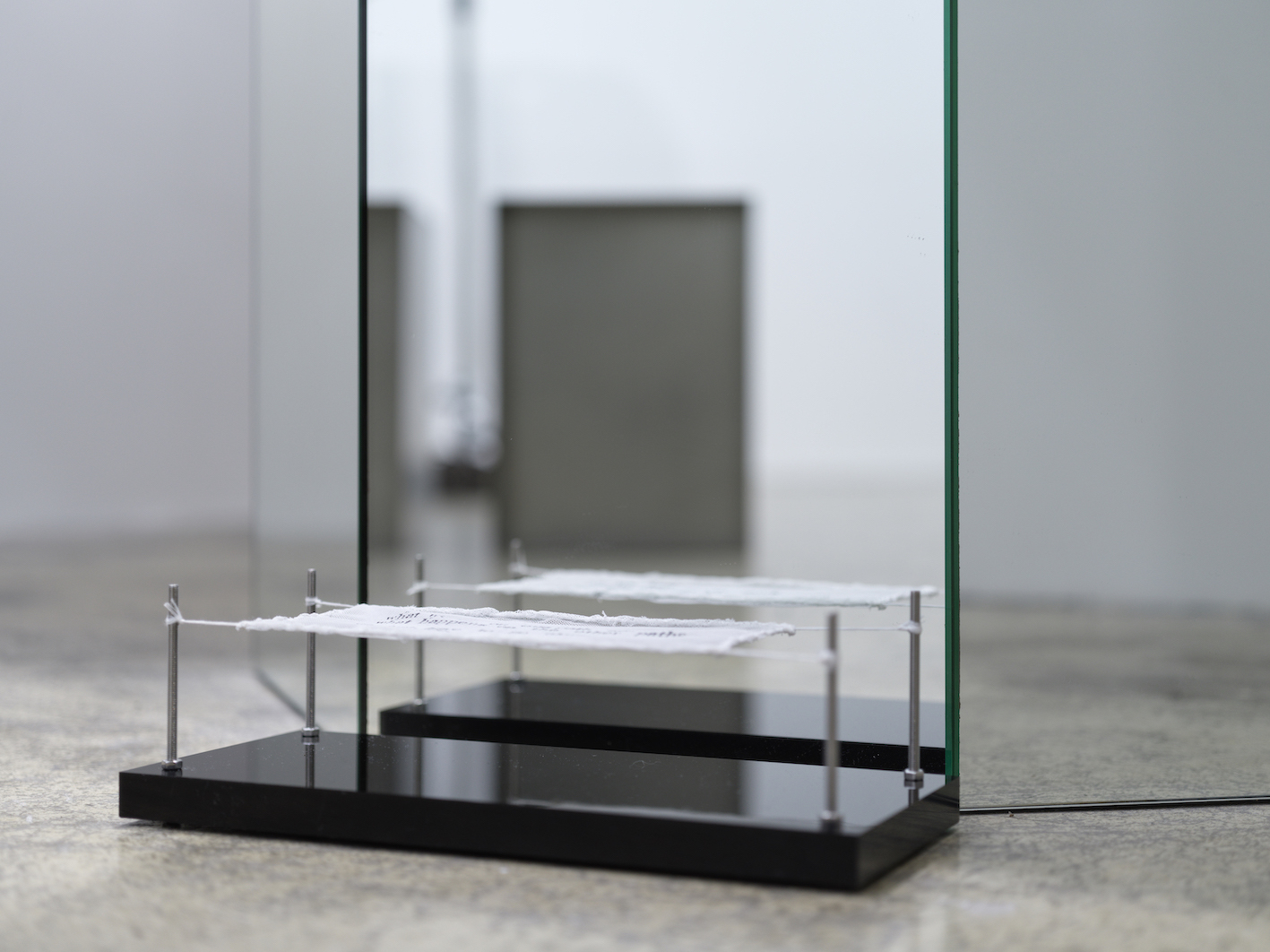
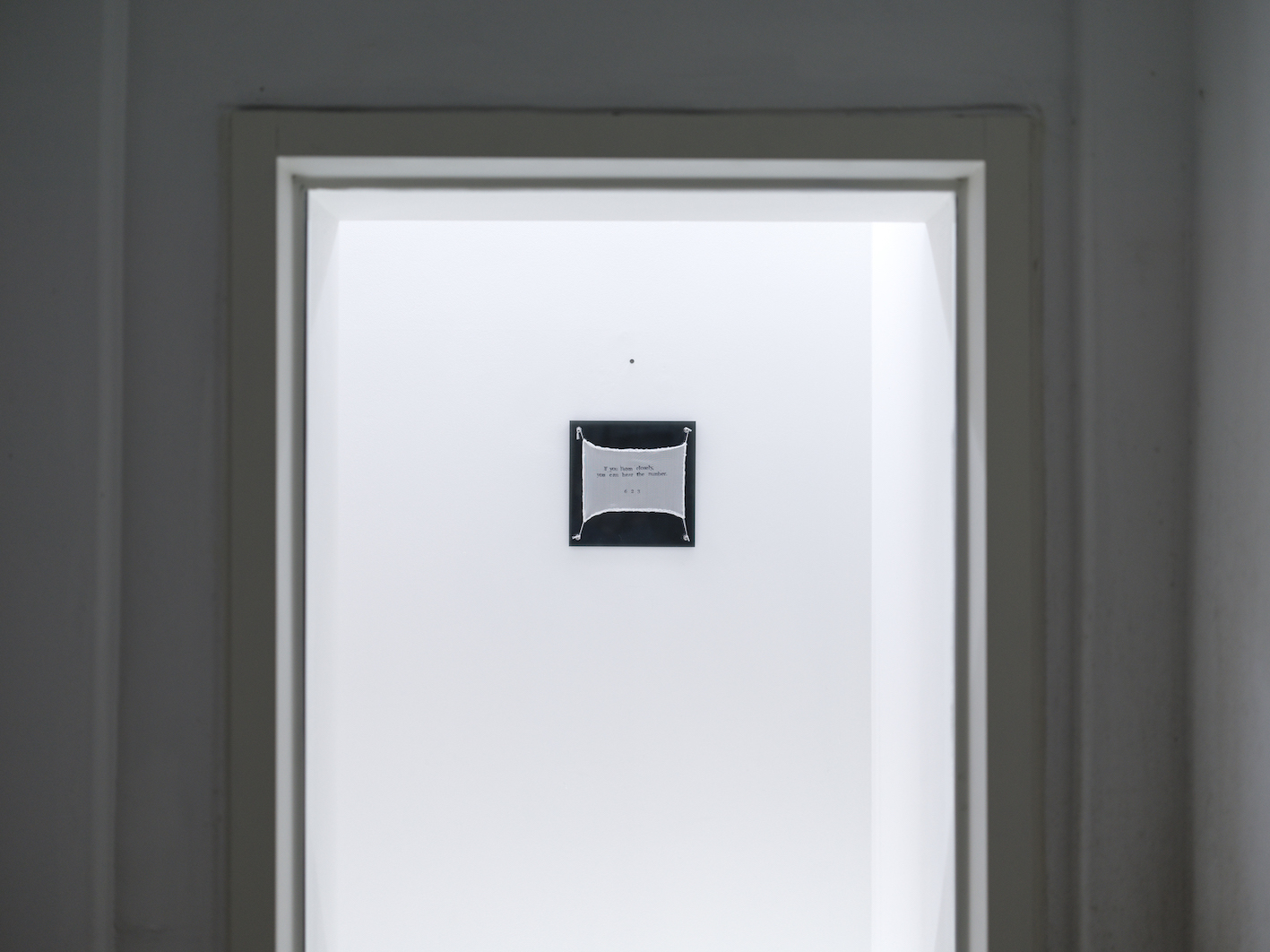
By spatially realizing the darkroom of a map Jihyun Lee has exhibited both the map that navigates her and its inherent paradox, and suggests sensuous absorption and experience as a method of approach, rather than observation and interpretation of objective information. The map thus becomes not an invariable document, but a momentary phenomenon, and her map brings doubt and belief to the surface as what lies at the center of its paradoxical premise. Her circular maze is a three-dimensional rendition of a planimetric map and speaks of collapse and escape. The repeating confusion and epiphany that traverses the continents of memory, emotion, information, and reason face and circle each other in a trance-like space-time. The exhibited experience ends with the audience reaching the darkroom as a physically spatialized darkness. I will withhold what we encounter there, and allow it to reside with the undecipherable ideal of the darkroom.
While I was driving and following my car’s navigation system yesterday, I took a wrong turn and took the longer winding path home. Thanks to this I was able to see a young doe with eyes as clear as the deepest darkness.
-
작가 이지현 JIHYUN LEE
이지현 (b.1992)은 서울을 기반으로 활동하는 조각가이자 설치미술가이다. 서울대학교 디자인학부를 졸업하였고, 현재 동 대학원 조소과에 재학 중이다. 특정한 대상이 없는 ‘앎’에 대해 느꼈던 개인적인 경험을 베이스로 ‘지금, 여기’에서 느껴지는 지고의 상태를 물질적 메타포로 변환해 작품으로 풀어낸다. 개인적인 자아가 사라진 자리에 나타난 하나임과 동시에 모든 것인 ‘무엇’을 표현하기 위해 개인이 드러나는 텍스쳐를 덜어내고 가장 기본적이고 순수한 색채와 형태를 사용한다.
-
Jihyun Lee (b.1992) is a sculptor and installation artist based in Seoul. She graduated from the Department of Design at Seoul National University and is currently pursuing a master's degree in Sculpture. Grounded in her personal experiences of a certain awareness without a specific object, she translates the state of knowledge experienced in the 'here and now' into material metaphors through her artwork. In order to express the ‘something’ that emerges in the space where the personal ego has disappeared - at once a singularity and encompassing everything - she minimizes textures that reveal the individual and utilizes the most basic and pure colors and forms.
-
-
-
-
-
-
-
-
CLEAR DARKNESS | 이지현 개인전
전시 기간 | 2023. 10. 17. - 10. 29.
관람 시간 | 화-일 1-6pm [월요일 휴관]
전시 장소 | 서울시 종로구 효자로9길 30 지하 101호
글 | 조정민
번역 | 정소영
사운드 디자인 | 유영주
포스터 디자인 | 정소영
전경 사진 | 허유
후원 | 서울문화재단
-